
Wealth Management News & Insights
Warren Buffett Steps Down, Oil Prices Surge, 32-Hour Work Weeks

Primary Sources
- PPI for Final Demand Moves Up 0.4% in August, Goods Advance 1.1%, Services Rise 0.1%: The Producer Price Index for final demand moved up 0.4 percent in August, seasonally adjusted, the U.S. Bureau of Labor Statistics reported. Final demand prices rose 0.1 percent in July and decreased 0.1 percent in June. On an unadjusted basis, the index for final demand increased 5.4 percent for the 12 months ended in August. [U.S. Bureau of Labor Statistics]
- Real Average Hourly Earnings for All Employees Decreases 0.1% in August: Average hourly earnings rose 0.3%, but consumer prices increased 0.4%, resulting in a 0.1% decline in real average hourly earnings, while real weekly earnings edged up 0.2% due to a longer average workweek. [U.S. Bureau of Labor Statistics]
Financial Markets
- Warren Buffett Steps Down as Chairman of Berkshire Hathaway: ‘Father Time Always Wins’: Warren Buffett is stepping down as chairman of Berkshire Hathaway, the sprawling conglomerate worth $1 trillion that he has led since 1965. The 96-year-old legendary investor announced the move in a letter to shareholders Friday. [CNBC]
- JPMorgan’s Petno Sees Bank Fees Surging While Warning the Cycle Feels ‘Too Good’: Doug Petno expects a stronger-than-expected quarter for JPMorgan, even as signs emerge that Wall Street’s recent momentum may be cooling. [Yahoo! Finance]
- Senate Blocks Crypto Regulation Bill in a Major Blow to the Industry: The 49-50 vote on whether to move forward with the legislation was a pivotal election-year test for the $2.3 trillion cryptocurrency market. [NBC]
- 10-Year Treasury Yield Tops 5% as Oil Surges and Diesel Hits New All-Time High: Talks between Iran and Gulf countries on the future of the Strait of Hormuz were delayed after a key Saudi pipeline was hit. [NBC News]
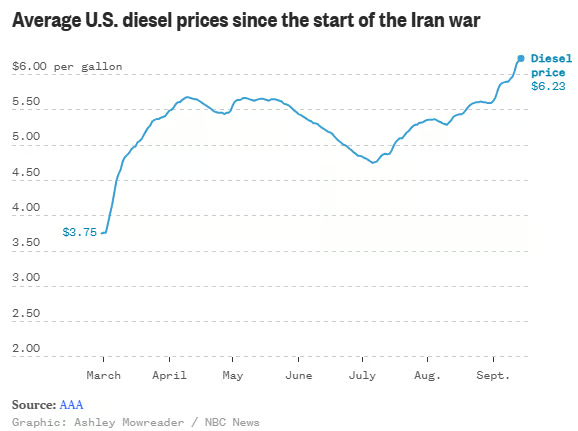
Average U.S. diesel prices have climbed sharply since the start of the Iran war, rising from about $3.75 per gallon in March to $6.23 per gallon in September, despite a mid-summer dip.
Financial Planning
- More Americans Are Going Bankrupt. What Does That Mean: Personal bankruptcy filings in the U.S. have risen sharply, with more than 500,000 cases filed last year, signaling that more Americans are struggling to manage debt and turning to bankruptcy for relief. [npr]
- The 3 Steps to Joining the 401(k) Millionaire Club: Skipping coffee won’t make you a millionaire when housing costs and student loans are eating your paycheck. [The Washington Post]
- You’ve Saved $2 Million For Retirement – But These 5 Traps Could be Quietly Devouring Your Nest Egg: Even sizable retirement savings can be undermined by poor planning, with taxes, healthcare expenses, and lifestyle creep posing some of the biggest long-term risks. The article focuses on strategies for protecting wealth rather than simply building it. [Yahoo! Finance]
Business Strategy
- These Places Already Tried a 32-Hour Workweek. Here’s What Happened: Real-world trials of 32-hour or four-day workweeks in several countries generally led to higher employee well-being, reduced burnout, and maintained or improved productivity. However, some organizations struggled with staffing, customer coverage, and adapting the model to certain industries. [Newsweek]
- Why It’s Difficult for Tech Companies to Rein in A.I.: Researchers say artificial intelligence is developing faster than the systems put in place to monitor and control it. [NYT]
Life & Work
- Divisions Emerge in the Tech Industry Over Calls For a Coordinated AI Slowdown: Fears about out-of-control artificial intelligence and suggestions to hit the brakes on the technology’s development aren’t new, but they have recently found new life as warnings about rogue AI systems causing mayhem grow louder. [ABC News]
- The Pros and Cons of Paying Off Your Mortgage Early: Homeowners who make extra payments can save thousands of dollars in interest. But financial experts say, paying down other debt, with higher interest rates, may be a better option. [NYT]
- Six Charts That Explain How Americans Really Feel About the Economy: Surveys show Americans remain downbeat on the U.S. economy despite positive indicators like low unemployment and steady growth. [WSJ]
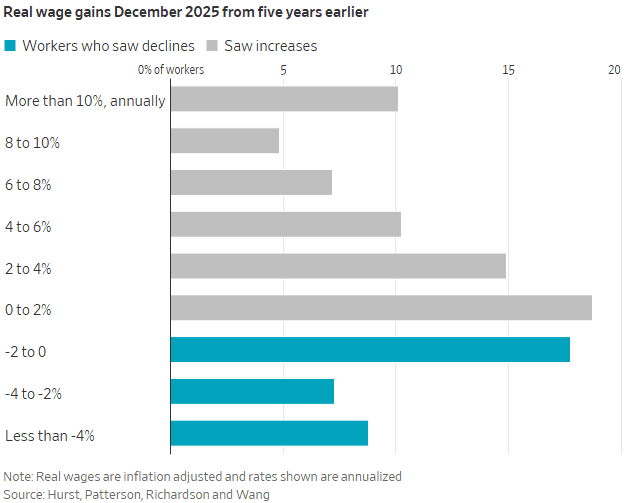
By December 2025, the majority of workers recorded positive real wage gains over the previous five years, though roughly one-third experienced declines in real earnings after inflation.