
Wealth Management News & Insights
Gas Prices Skyrocket, Retiring with an Irregular Income, Meta Trial Escalates

Primary Sources
- Producer Price Index News Release Summary: Producer prices were unchanged in July, signaling a pause in wholesale inflation after a 0.1% decline in June and a 0.5% increase in May. On a year-over-year basis, producer prices were up 4.7%, indicating that inflation pressures remain elevated compared with a year ago. [U.S. Bureau of Labor Statistics]
- Real Earnings Summary: Wage gains continued in July, but inflation absorbed most of the increase, leaving workers’ purchasing power largely unchanged and highlighting the ongoing challenge of achieving meaningful real wage growth. [U.S. Bureau of Labor Statistics]
Financial Markets
- US Gas Prices Reach Highest Ever Recorded for August Amid Stalled Talks with Iran: Energy prices have been high since the US-Israel war with Iran began and the strait of Hormuz was blocked. [The Guardian]
- Alphabet Raises $25 Billion From Sought-After Bond Sale: Alphabet is returning to the bond market with a debt offering of up to $25 billion to help finance its rapidly rising AI infrastructure spending, as investors weigh concerns about the impact of massive capital expenditures on the company’s cash flow and future returns. [Bloomberg]
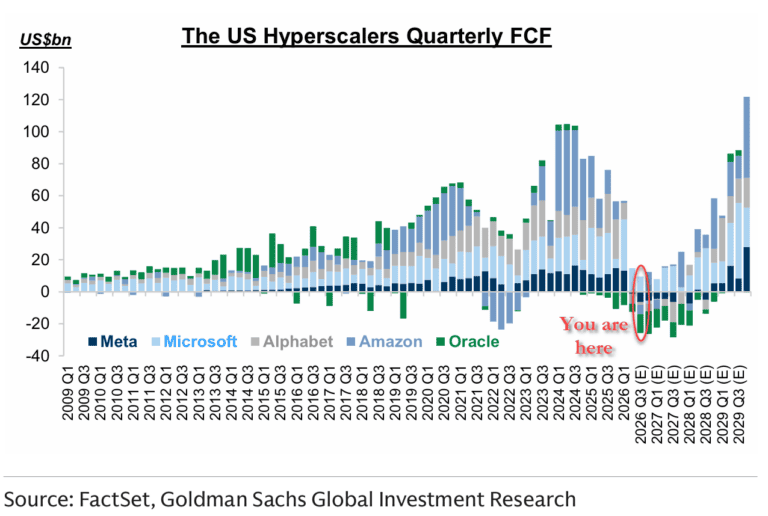
Heavy AI investment weighs on cash flow in the near term, with growth expected to return after 2026.
Financial Planning
- Saving for Retirement on an Irregular Income: Even if your work doesn’t fit the 9-to-5 routine, you can still stay on track for retirement. Here are a few scenarios where you can still use an irregular income to save for your goals. [Schwab]
- SALT Deduction Gets an Update for 2026 Taxes: The SALT (State and Local Tax) deduction limit increased to $40,400 for 2026, up from the long-standing $10,000 cap, giving many homeowners and taxpayers in high-tax states a larger federal tax break. However, the benefit begins to phase out for higher-income taxpayers and is only available to those who itemize deductions. [Kiplinger]
- 8 Mistakes to Avoid When Planning for College Costs: These planning mistakes could potentially cost you thousands in lost student aid and raise your out-of-pocket expenses. [Schwab]
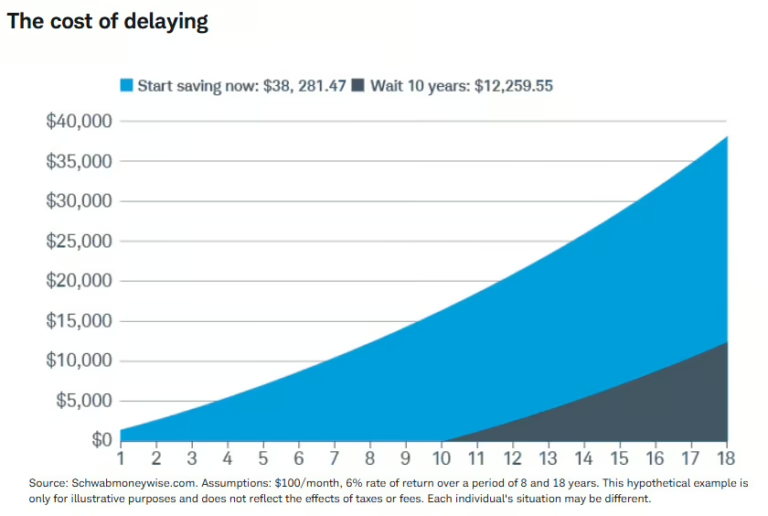
Starting early makes a powerful difference: saving $100 per month at a 6% annual return can grow to about $38,281 over 18 years, compared with just $12,260 when saving begins 10 years later.
Business Strategy
- Why Wall Street and Nvidia Are Building an Exotic Money Pipeline for the AI Boom: Nvidia CEO Jensen Huang teamed up with Wall Street firms on a $500 billion plan to standardize chip financing and create asset-backed capital pools. The plan aims to sell public and private debt to establish dedicated platforms that will finance AI chip deals for smaller buyers. Nvidia may use its balance sheet to backstop up to 25% of a project’s cost, putting the chip maker on the hook if an end user defaults. [WSJ]
- CEO Says Doing Business in State ‘Sucks’ as Company Heads to Texas Amid California Exodus: CEO of Digital Brands Group, who moved his apparel and e-commerce company’s headquarters from Southern California to Round Rock, Texas, explains the high costs and challenges of operating in California. [Yahoo! News]
- The Ultrawealthy Tax Maneuver That’s Spooking Schwab and Fidelity: Fidelity and Schwab are limiting a popular tax-saving investment strategy used by wealthy investors because of its growing complexity and risk. The move could make it harder for some investors to use long-short portfolios to reduce capital gains taxes. [Bloomberg]
Life & Work
- The ‘Country Hicks’ Who Refused $26 Million from an AI Data Center: A mother and daughter rejected a $26.48 million offer for their Kentucky farmland from a company that wanted to build an AI data center. The proposed 2.2-gigawatt hyperscale data center project has divided the town of Maysville, Kentucky. [WSJ]
- Meta Heads Back to the Courtroom to Face its Biggest Social Media Addiction Trial Yet: Meta is facing a landmark trial brought by 29 state attorneys general who allege Facebook and Instagram were intentionally designed to addict young users, harm their mental health, and improperly collect children’s data. The case could result in massive financial penalties, potentially up to $1.4 trillion, and force significant changes to how Meta’s platforms operate if the states prevail. [CNN]