
Wealth Management News & Insights
Jamie Dimon Letter to Shareholders, Private Credit’s Exposure to Ailing Software Industry Is Bigger Than Advertised, Now That You’re Done With Taxes – Here’s What To Know For 2026

Primary Sources
- Chairman and CEO Letter to Shareholders – Annual Report 2025: In 2026, America is celebrating its 250th anniversary. Also this year, we are celebrating the 227th anniversary of JPMorganChase, which was founded in April 1799. This is the perfect time to rededicate ourselves to the values that made this great nation of ours — freedom, liberty and opportunity — and to recognize that we all stand on our country’s shoulders. [JPMorganChase]
Financial Markets
- Iran’s Wealth Is Parked on London’s Billionaires’ Row: Years of Western sanctions haven’t prevented money flows out of Tehran: ‘They probably learned from the Russian oligarchs’. [WSJ]
- The Dealmaking Gamble Threatening Estée Lauder’s Turnaround: Minority investors have doubts about the founding family’s plan to buy Puig but may be overruled. [WSJ]
- Chicago Startups Eye Long-Awaited Exits As IPO Market Warms Up: The IPO market, long seen as a signature achievement for startups, has been slowly thawing from a deep freeze that started in 2022, when offerings of venture-backed companies plummeted to just 14 from 168. [Crain’s Chicago]
- He Brought Private Credit to the Masses – Now the Masses Are Fleeing: Stephen Nesbitt’s Cliffwater is racing to calm investors after steep withdrawals. [WSJ]
- Private Credit’s Exposure to Ailing Software Industry Is Bigger Than Advertised: Analysis by the Journal finds four of the largest private-credit funds have more exposure to the software industry than their filings suggest. [WSJ]
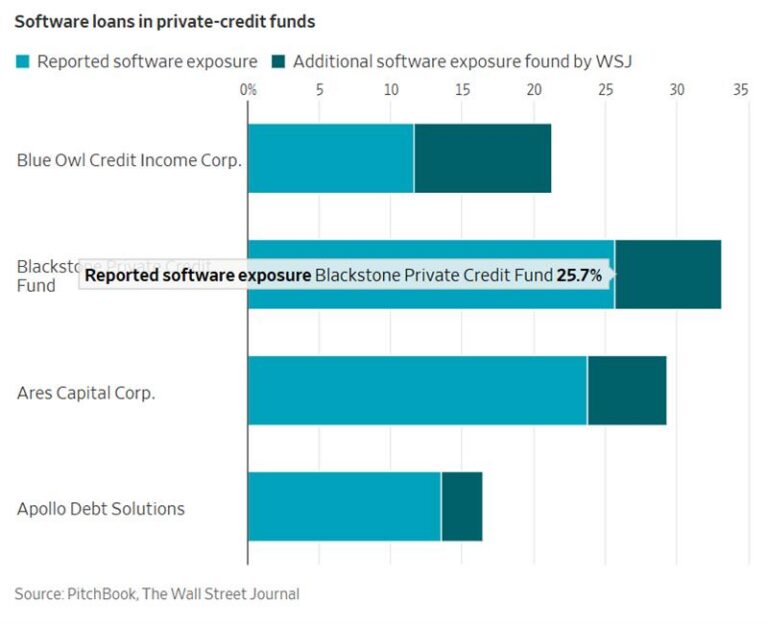
The chart above shows software loans in private credit funds. The fund’s involvement in software loans is higher than they disclose.
Financial Planning
- Now That You’re Done With Your Taxes, Here’s What to Know for 2026: Act soon to maximize benefits or minimize hits from last year’s tax changes, especially for charitable deductions, 529 accounts and withholding. [WSJ]
- Surging HOA Fees Are Pushing Homeowners to the Brink: Monthly costs of homeowners associations have jumped 26% since 2019; owners can also be hit with special fees for large repairs. [WSJ]
Business Strategy
- Why a $500 Steak Dinner Only Yields a $25 Profit: Steakhouse owners dish on their challenging economics as meat and labor costs grow. [WSJ]
- Amazon Debuts Masters Coverage, Becoming The Golf Tournament’s Fourth-Ever Media Partner: Amazon is only the fourth media partner in Masters history, joining CBS, USA Network and ESPN. [CNBC]
- Novo Nordisk’s Explosive Wegovy Pill Launch Draws A New Wave of Patients Into GLP-1 Weight Loss Treatment: CNBC spoke with five U.S. patients who recently started the pill following its launch and have varying initial experiences. [CNBC]
- Amazon and U.S. Postal Service Reach New Deal on Deliveries After Year of Talks: Amazon will cut the volume of packages it ships through the Postal Service by 20 percent under a tentative new deal that will preserve a crucial source of income for the agency. [NYT]
- Gwyneth Paltrow Is Bringing Her Takeout Business to New York City: Goop Kitchen says its top locations make $20,000 a day each. This month, the delivery and pickup company is going bicoastal.
Life & Work
- First-Class Seats Drive Airline Profits – It Wasn’t Always This Way: Airlines used to give away most of their nicest seats, but they have increasingly found ways to persuade people to pay a lot for them. [NYT]
- A Must for the Next Food Craze? Be ‘Social Media Gorgeous.’: The ascent of ube has little to do with the purple yam’s taste or Filipino origins. It’s the color, flavor experts say. [NYT]
- What Seasonal Allergies Do to Your Body: A breakdown of why your immune system treats pollen like a parasite — and what happens next. [NYT]
- Why Concerts Keep Getting More Expensive: Stars such as Harry Styles are visiting fewer cities, so fans have to drum up additional money for travel and lodging. [WSJ]
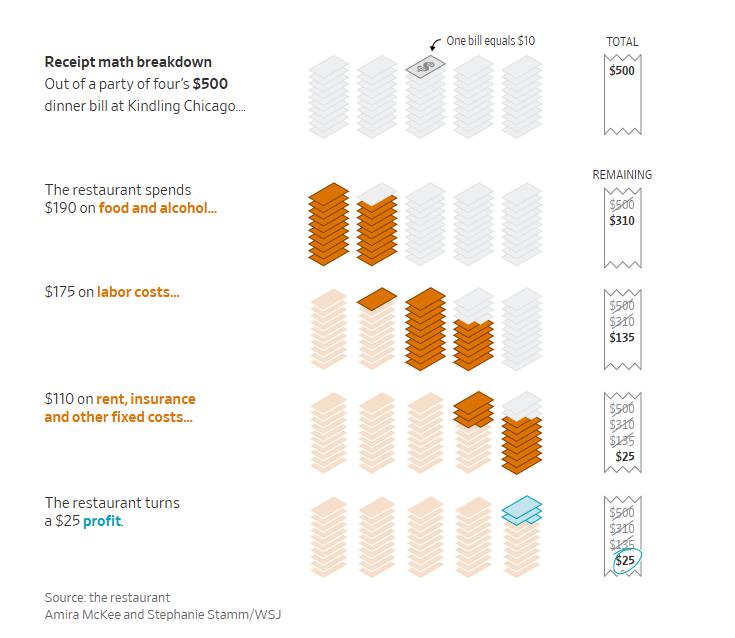
The chart above shows how a $500 bill at the Chicago restaurant, Kindling, is distributed. After all operating expenses are paid, the restaurant is left with only $25 profit.